Category: Blogging

  • October Cover for CLM

    October Cover for CLM

    In early September, I got a chance to work with Jaimielynn Cooper of County Lines Magazine to shoot the October cover at Wolff’s Apple House in Media, PA.

    After an hour or so of looking around at the various fruits and vegetables that were available to us, Jaimielynn & I  put together various scenes, took a couple of cell phone shots, and sent them back to the editors for review.

    I thought to my self how much things had changed.

    Gone are the days of shooting a test shot with a Polaroid…

    The image slowly came together, and we captured this –

    October 2014 Cover - County Lines Magazine
    October 2014 Cover – County Lines Magazine

    In the days leading up to the October release date, there were a few magazine sightings!

    CLM October Cover - Ready for Distribution
    CLM October Cover – Ready for Distribution

    So check your news stands to get your copy!!

    Thanks again to Jaimielynn Cooper and the other wonderful folks over at County Lines Magazine for this opportunity!

    [contentblock id=1]

    [ Download PDF ]

  • Keywords & Lightroom

    Keywords & Lightroom

    I’ve been using Adobe Lightroom ever since it first came out, and during that time, I have always used Keywords for my images (40,000+). Lately, however, I have revisited my ‘home made’ Keyword List, and have stumbled onto a whole sub-topic within Lightroom that I wish I had found MUCH earlier!!

    Here is one of the best tutorials on the subjects, which I found on lightroomqueen.com –

    Why Keyword A Stock Photograph?

    It is not that technical or difficult, but the challenge is how deep you want to get into keywords.

    What got me revisiting my Keyword List was a need to publish more stock photography, which requires keywords, and the more the better!

    What is also kind of fun, along with frustrating, are the words and the various synonyms! As you go through the List, you realize that a given Word can have so many meanings or spellings, especially in English!

    Getting Started, Again!

    As mentioned earlier, I have been using the Keywords since I started, so essentially it was just a straight alphabetized list of words, without any organization.

    After finding the Lightroom Keyword List Project website, which is Open Source and Free, I downloaded the Foundation List (ver 1.0.1), and Imported it into Lightroom.

    Mistake One!

    Stupid me…

    After using computers for 30+ years…

    I never Exported my ‘homemade’ List as a Backup BEFORE I started.

    Oops…

    So I have the GIGANTIC list of Words, some of which are organized, but most not…

    I should have organized my ‘homemade’ Key Word List first, and then Imported the Foundation List.

    Lessons Learned

    At the moment, I have spent SEVERAL hours, going through my new Keyword List, and reorganizing it into a hybrid.

    Again, I wish I had started this from the beginning!

    That being said, here are some things learned, so far…

    Keywords not equal

    Even though the Keyword list itself is nothing more than an ASCII text file, having a Word on a single line does NOT mean it (the Word) will be Counted correctly in Lightroom.

    Each Keyword is supposed to be on a Single Line, but there is a big difference between a Word and a [Tab space] BEFORE the Word!

    This gets into the heart of Categories, which is covered very well on photo-keywords.com in their Tutorial.

    It does make sense, when you think about it, and thankfully Lightroom gives you a much easier way to move Keywords into the Categories.

    Yes, you could do the SAME thing in the Text file, BUT if you are unsure of the meaning of the Word, you can not “see” that, but in Lightroom, you can call-up the images, and “see” the Keyword’s meaning, and Edit from there.

    Time to Clean-Up

    As you edit your keyword list, you will find ‘bad’ words, for what- ever reason, and here is a get chance to clean-up the list!

    At some point, do open up your “working” version of your Keyword list in a Text Editor, and run a Spell Checker on the List.

    Lightroom becomes sluggish

    While moving Keywords around, I began to notice Lightroom becoming sluggish, and after several large Keyword ‘moves’, I realized Lightroom is re-writing meta-tag data back into the various files!

      1. You Create/Update a Keyword;
      2. The Keyword is Created/Updated in the Lightroom database;
      3. The metadata is rewritten into the file (xmp, psd/psb, tiff, jpg, etc.)

    Needless to say, you are going to want to do these operations across fast hard drives, and if possible, have your main collection of images on a separate disk(s) from where Lightroom is installed, so there will be less of a bottle-neck in processing the keyword “move” requests.

    Also, remember to back-up and Optimize your Lightroom catalog!

    You will also want to back-up your original images too, since these keyword changes are also re-written into the various files: xmp, tiff, psd, psb, jpg, etc.

    Procedures

    If you are starting Fresh, download one of the various Keyword Lists that are available.

    I started at Victoria Bampton’s (Lightroomqueen.com) – Keyword Lists / Controlled Vocabularies, and looked at each list, and then stared with Lightroom Keyword List Project – Foundation List.

    If you are starting with an existing list, be prepared to spend some time on this project, but it will be worth it!

          • Backup your Original List, “as is”
          • Review the Keyword List Structure (Foundation List) you have Chosen in a Text Editor
          • Organize your Original List (and Backup)
          • Import the new Keyword List Structure into Lightroom
          • Reorganize and Edit

    In just reorganizing my list, I have noticed numerous other Keywords that could easily describe a given image, which can only help during my workflow in publishing to the stock photography market!

    As mentioned several times, I wish I had started this sooner!

    I hope that you have picked up some new ideas with this post, and feel free to comment or ask questions!

    [contentblock id=1]

    Quick Links

  • Scrapple Review

    Scrapple Review

    I was first introduced to scrapple at my boarding school in Middletown, Delaware. I was told, that it had been brought to the school, by a faculty member who grew up in western Pennsylvania.

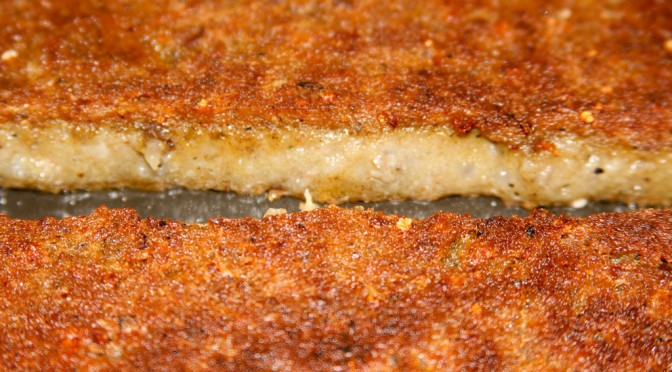
    When scrapple was served, it was on large baking sheets, thrown into the oven to broil until the surface was brown… any number of shades of brown, venturing into black upon occasion.

    When presented, there were generally few takers of these darkened trapezoids, but for a few, this mystery meat was very welcomed!

    Over the years, and mostly through social media, I have been engaged in many conversations about this ridiculed ‘food’, and have decided to stand up for this wonderful treat brought to us by the Pennsylvania Dutch, also known as panhaas or “pan rabbit”.

    The following is my Review of the various Scrapples that I have been able to find, and I look forward to try more!

    Cooking

    There are several different ways to cook scrapple, and as mentioned earlier, I was first introduced to oven baked, which if not done right, one is trying to eat brick slabs.

    For these reviews, I took a scrapple loaf, and cut into 4 equal slabs, roughly 1/2 inch thick, and pan-fried them.

    Over the years, I have switched from a dry pan, to either margarine, oil (corn & olive) or butter, depending on what else I am eating or how decadent I am feeling.

    In these reviews, I have used margarine and half of a loaf, including side piece.

    Why a side piece? – Try it with a lot of butter in a small pan some time! The uneven shape can cook very differently! (I did mention decadent…)

    Habbersett Scrapple

    “Habbersett brand has been around since 1863. The original facility was located in Media, PA” – Habbersett website

    I have eaten, by far, more Habbersett then any other.

    I have cooked, grilled, broiled pan and deep-fried this stuff!

    It is my “bread ‘n butter” scrapple.

    In terms of the loaf, Habbersett reminds me more of a bread loaf than others I have seen, and when cut-up there are more trapezoid shapes. This is the inter geek in me speaking.

    Side Piece – Most folks aim for uniform slabs, and miss one of the more tricky parts to cook, but if done right, you can more textures with the finished piece!

    Spices – For most, Habbersett seems to be the most peppery of the three that I have tried so far, and because of this, goes very well with scrambled eggs or cheddar cheese!

    [Notes/Update]

    One reader commented –

    “I found Habberset to be very greasy and “popped” a great deal when I cooked it. Maybe the grease is what gives it the extra flavor that you like, but I found it to be a mess.” – Peter S

    I agree there does appear to be more fat/greasy, which would add to the flavor, but no one can say eating scrapple is healthy! With my 50th right around the corner, I can’t be eating this stuff everyday!

    Rapa Scrapple

    “In 1926 two brothers from Bridgeville, Delaware founded the RAPA Scrapple manufacturing plant.” – Rapa website

    Several of my Delaware based friends have mentioned Rapa, and when I tried this, the first thing that struck me, was how square the loaf was, and a course texture on the outside.

    The squareness of the loaf, made cutting the 4 slabs equally, very easy, but for some reason they did seem smaller.

    Noting to mention about the pan frying, and I was easily able to get a golden brown crust.

    Taste test – The general flavor was rather bland to me, and I did eventually add more salt and ground black pepper to it, but I did like the courser grade of cornmeal.

    Hatfield Lean Scrapple

    “Over 110 years ago John C. Clemens began Hatfield Quality Meats’ tradition of satisfying customers with quality, delicious pork products in the Philadelphia farmer’s markets. ” – Hatfield Quality Meats

    I have seen the Hatfield name most of my life when shopping, and they do have some good meats, but I can not say the same for the scrapple.

    One of the first things you notice about the package, is “Lean”.

    When I first mentioned I was trying Hatfield, a Facebook friend commented “What’s the point in scrapple?!”

    I have to agree.

    When I unwrapped the loaf, it was also fairly uniform, but with rounded edges. Cutting into quarters was easy, with the cut edges a little but rougher then normal.

    Cooking time seemed longer to get the medium brown crust I like, but it could have been that I was hungry.

    Finally when I tried my first bites, the spices mixture was very nice, with my pepper than Rapa, but not as much as Habbersett, a nice middle ground for some.

    The cornmeal mixture was smaller than Rapa, but for some reason the interior texture did not seem to firm up during cooking, there for a little bit more mushy than the other three.

    What did get me was the interior texture, that had not firmed up during cooking.

    Stoltzfus Meats

    I was on my way back from my parent in Lancaster, and first stopped at Intercourse Canning Company to pick-up some items, and right across the street is Stoltzfus Meats & Deli.

    The Stoltzfus Scrapple is as Homemade that you can get, and to say it is fresh, is such an odd statement!

    What was also odd to see, were the huge slabs of scrapple (20+ lbs?) just sitting there in the refrigerator case.

    I bought a simple pound, namely because I’m only about 30 minutes away, and I don’t think they are going to run out any time soon!

    Anyhow, how was it?

    I liked it!

    I was easily able to get a nice even crush on both sides, mostly from a higher fat content.

    As for taste, it is a top contender to Habbersett, with a little less black pepper.

    Conclusions (so far)

    The single biggest difference between the various scrapples I have tried in the Black Pepper amount.

    I also have to tell you, I like Black Pepper a lot, and I’ve been known to unscrew pepper shaker tops because it does not come out fast enough…

    So your personal Black Pepper level is going to be your guide.

    Another factor, is the dryness of the loaf, and this seems to be due to the coarseness of the grinding of the ingredients, the denser loaves, with a finer mush seems to hold up better during pan fry cooking.

    Scrapple Hunting

    With this elementary Review of Scrapples done, I have more to seek out.

    So far, the single biggest difference that I have tasted is the black pepper level. I for one like, so…

    I’m also learning to refine my pan frying techniques to be more consistent, but I have learned the corn to fats & water ratios play an important part when preparing!

    In my refrigerator, I have an unopened Kunzler scrapple loaf…

    And friends suggesting some of the following:

    • Hershey farm market
    • Shady Maple in East Earl
    • Hughes Delaware Maid Scrapple
    • Greensboro
    • Kirby & Holloway

    More Scrapple Info

    Videos

    Events

    If you know more, please let me know, and if you are a maker of scrapple and would like to be added to my review, please contact me!!

    BTW – It should be noted, that some of these scrapple producers, do NOT make it easy to find their scrapple products on their websites!

    [contentblock id=1]

  • Images from Media in County Lines Mag!

    Images from Media in County Lines Mag!

    I am happy to announce that the Folks at County Lines Magazine have published several more of my images in this June’s “Meet Me in Media” article!

    Back in April, I spent a chilly morning wandering around Media with Jaimielynn Cooper, as she planned her story for the article. It was like having my own personal tour guide of the town!

    When I received the Final PDF Proof of the article, it was also fun to see that I shared image space with Ralph Nardell, as I first learned about him on Flickr and then on Facebook.

    The world just seems to get smaller!

    Here are some additional images that were taken that April morning.

    If you are interested in the Full Article, it can be viewed in PDF format with this Link:

    Download County Lines – “Meet Me in Media” (June 2014) PDF file

    Thanks again to Jaimielynn Cooper and all the wonderful Folks behind the scenes at County Line Magazine!

    [contentblock id=1]

  • Lens Hoods

    Lens Hoods

    One of my biggest gripes, when it comes to Canon cameras, is that they charge you extra for lens hoods, which are incredibly marked up in price.

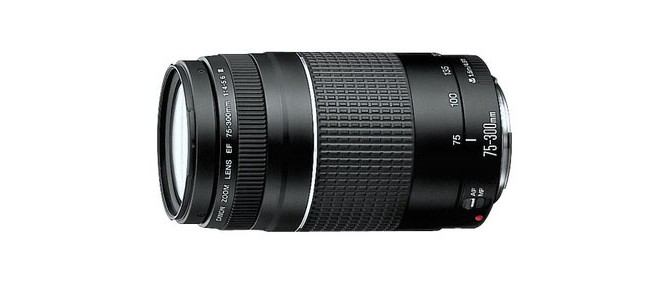
    What really set me off recently, was when I replaced my 70-300mm USM IS  with a 75-300mm III.  I thought the lens hoods and filters would be the same.

    I was only half right. My filters are fine, but it appears I have to buy a completely new lens hood for my new lens instead of being able to use the old one.

    To be technical, the 70-300mm IS USM requires a ET-65B lens hood, which can be purchased through Canon at $55.00 USD.

    Canon ET-65B Lens Hood
    Canon ET-65B Lens Hood

    On the other hand, my new 70-300mm III requires a ET-60 lens hood, which is a little cheaper at $29.00 USD.

    Canon ET-60 Lens Hood
    Canon ET-60 Lens Hood

    Now I am no expert, but there does appear to be a slight difference in the tapering of the hood, but $26.00 worth?

    It just seems a little bit extreme not to have a tad bit more compatibility during engineering. I still do not understand how these black cylinders of plastic cost so much and are not included with the purchase of a lens worth several hundred dollars.

    Needless to say, I’m off to Amazon to purchase a Fotodiox ET-60 lens hood for $6.95 USD, and with the money I saved, I can start thinking about another lens and hood!

    [contentblock id=1]